
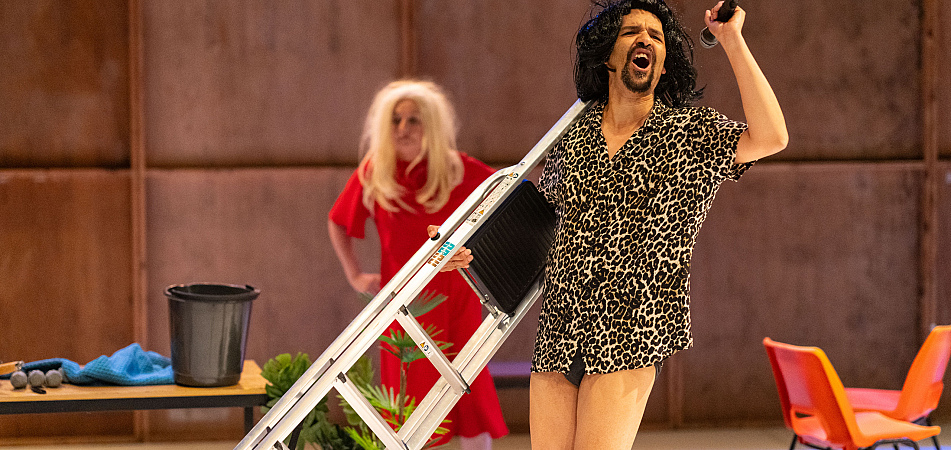


We're a group of six artists based in Sheffield, UK. Our work is an over 40 year collaboration, reinventing theatre to speak about the times we are living in, inspiring audiences across the UK, in Europe and further afield.
About Forced Entertainment
Everything Must Go
16 Jul 2026
- 22 Jul 2026
Festival d'Avignon, Avignon, France
Selected Works: Table Top Shakespeare
22 Sep 2026
- 27 Sep 2026
Sydney Opera House, Sydney, Australia
Cold Sweat
2 Oct 2026
- 3 Oct 2026
Sheffield Theatres, Sheffield, UK
-

Everything Must Go at Festival d'Avignon
We're super excited to be part of the programme at Festival d'Avignon this year with our new show. The Festival has been a great supporter of our work over the years and join as a co-producer in this new piece, Everything Must Go.
More... -

Forced Entertainment becomes Associate Company at Sheffield Theatres
Sheffield Theatres have welcomed four local Associate Companies to support the development of their work and future collaborations. Alongside Forced Entertainment, the companies are Roots Mbili Theatre, Stand & Be Counted Theatre and The Bare Project.
More... -
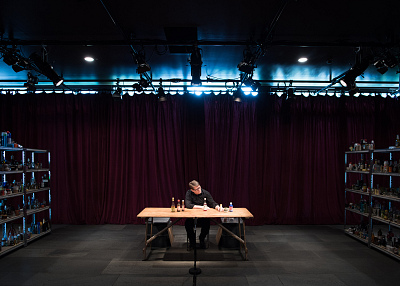
Complete Works Online
Complete Works: Table Top Shakespeare videos are now free to view, available as both the original live streamed premiere (2016) and also the 'at home' pandemic edition (2020).
More... -
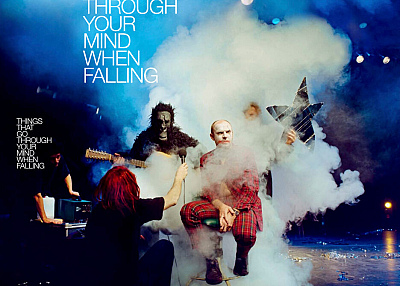
Our most recent publication available to buy from our bookshop
"Things That Go Through Your Mind When Falling: The Work Of Forced Entertainment" is a brand new book documenting the company's work from its very beginning right up until the days of the covid pandemic.
More... -
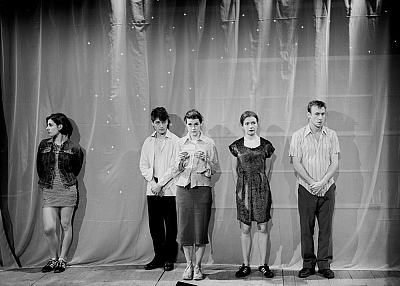
Forced Entertainment at 40!
It all started in 1984. Here you will find more information about 2024 activity where we celebrated 40 years of tearing up the rulebook, including a brand new short film from Hugo Glendinning on the process of collaboration
More... -
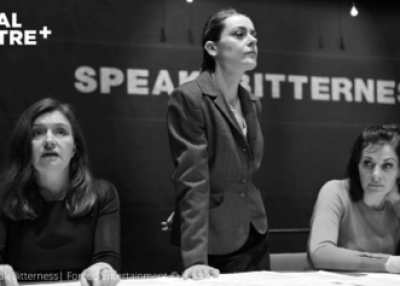
Forced Entertainment join Digital Theatre+
We've teamed up with Digital Theatre+ to present five productions via their online subscription service for educational institutions. Emanuelle Enchanted, Club of No Regrets, Speak Bitterness, Tomorrow's Parties and Real Magic.
More...